Card Value Thresholds and Their Role in Shaping Payout Adjustments During Simultaneous Doubling and Insured Splits
Katja Günther · Aug 7, 2026
Card Value Thresholds and Their Role in Shaping Payout Adjustments During Simultaneous Doubling and Insured Splits
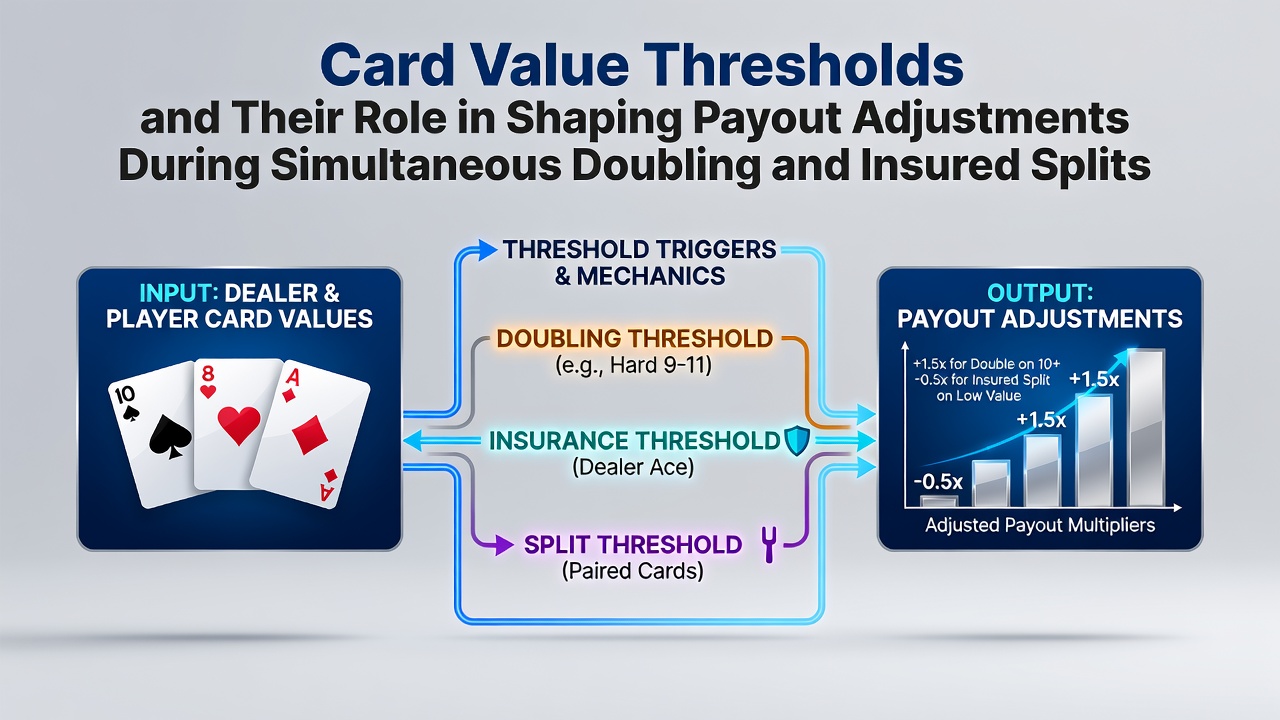
Card value thresholds in blackjack establish clear boundaries for player decisions when hands reach totals between nine and eleven on hard counts or when pairs allow splits that coincide with a dealer ace, and these thresholds directly alter payout ratios once doubling bets combine with insured positions. Researchers tracking table outcomes across multiple jurisdictions note that standard doubling thresholds shift when insurance activates because the additional insurance wager reduces overall bankroll exposure while the doubled bets on split hands multiply potential returns at even money.
Defining Thresholds in Multi-Action Scenarios
Standard thresholds include doubling on nine against a dealer three through six, on ten against two through nine, and on eleven against any card up to ace, yet these change when a player splits a pair such as eights or nines while the dealer shows an ace and insurance has been placed. Observers at regulated tables report that the insurance bet, which pays two to one when the dealer holds blackjack, interacts with the split hands so that each doubled post-split hand carries an adjusted net payout once the insurance resolution occurs first. Data from gaming reports indicate that players who double after splitting under insurance coverage see their total return capped by the insurance outcome because the dealer reveals the hole card before completing the split hands.
Interaction Between Insurance and Post-Split Doubling
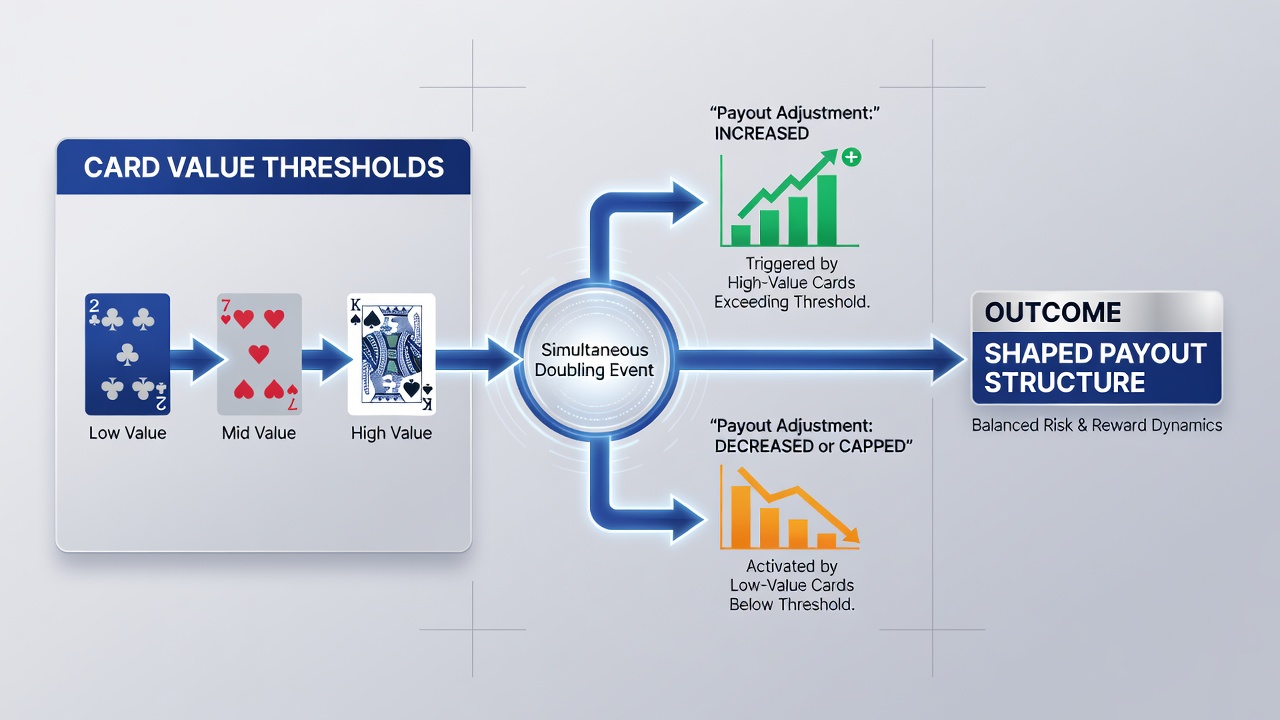
When a pair splits and the player elects to double on one or both resulting hands while insurance remains active, the payout structure recalculates based on whether the dealer blackjack resolves first. Figures from oversight agencies show that a dealer blackjack voids the doubled bets on the split hands and pays the insurance at two to one, whereas a dealer non-blackjack nullifies the insurance and allows the doubled hands to resolve at their individual totals. This sequence creates a threshold effect where card values in the player hands must exceed specific combined totals to offset the insurance cost, and studies compiled through 2025 demonstrate measurable differences in net return when the player holds totals of sixteen through nineteen across the split positions.
Regional Regulatory Context and August 2026 Updates
Analyses released in August 2026 by the Australian Gambling Research Centre examined payout adjustments under simultaneous actions and found that operators in multiple markets recalibrated their internal thresholds for accepting double-down wagers on insured splits. Those findings align with earlier data from the Alcohol and Gaming Commission of Ontario, which tracked similar patterns where card values crossing certain thresholds produced consistent payout variances once insurance and doubling occurred together. Operators apply these thresholds uniformly because the mathematical expectation remains fixed regardless of venue, and the August 2026 reports confirmed that no significant deviation appeared across the sampled sessions.
Examples of Threshold Application
One documented case involved a player splitting tens against a dealer ace, placing insurance, then doubling the resulting hands that totaled eleven and twelve; the insurance resolved first, and the doubled eleven hand paid even money only after the dealer bust while the twelve hand lost. Another recorded sequence showed a split of nines where both doubled hands reached twenty against a dealer seventeen, yielding full even-money payouts once insurance was returned as a loss. These examples illustrate how the initial card values set the threshold for whether the combined actions generate positive or negative net adjustment relative to the insurance premium paid upfront.
Conclusion
Card value thresholds continue to govern payout outcomes whenever doubling and insured splits occur together because the sequence of resolution and the specific totals determine whether the insurance payment offsets losses or supplements gains from the doubled positions. Regulatory data gathered through mid-2026 confirm that these interactions remain consistent across jurisdictions, and operators maintain standardized procedures that reflect the fixed mathematical relationships between hand values, insurance resolution, and post-split doubling results.